







Published 11 October 2026 · OFM4x4.CO.UK
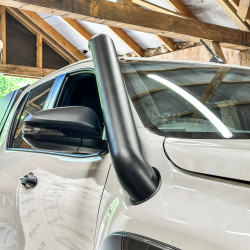
A snorkel moves the intake opening higher, but water can still enter through a poor joint farther down the system. The visible tube on the wing is only one part of the route from outside air to the engine.
A useful pre-trip check follows that complete route and confirms what was done during installation. It also keeps the vehicle handbook’s limits in view: snorkel height is not a new approved wading depth.
The quick answer
Check the exact kit instructions and the complete intake path, including connecting ducts, clamps, airbox lid and any drains addressed by the manufacturer. Ask a competent installer to assess sealing. Do not block drains indiscriminately or test by covering the intake with the engine running. A snorkel does not make the rest of the vehicle waterproof or justify driving into floodwater.
In this guide
Trace the complete intake path
Start at the intake head and follow the snorkel outlet into the connecting hose or duct, then the airbox and engine intake. Identify every joint and any original opening that remains. A tidy external installation cannot prove the concealed connections are sealed.
With the engine off, look for loose clamps, displaced hoses, cracks and disturbed seals. These observations can identify reasons for an installer to investigate. They cannot certify water-tightness by themselves.
| Area | What to establish |
|---|---|
| Snorkel and duct | Correct kit, connections and installation procedure |
| Airbox lid | Correct filter fit and undamaged sealing arrangement |
| Drains and original openings | Treatment specified for this exact application |
| Installation history | Who fitted it and which instructions were followed |
Use model-specific sealing instructions
Manufacturer instructions can treat openings differently between vehicles. For example, Safari’s SS385HF fitting guide specifies sealing at the connecting duct and air-filter housing, while its SS580HF guide discusses an installer’s decision about an intake drain opening.
Those examples show why a blanket “seal every hole” instruction is inappropriate. They are not fitting instructions for another snorkel, a stainless kit or a different vehicle. Obtain the current guide for the actual part number and have the installer resolve any unclear drain treatment.
Recheck joints after other intake work
A filter change, airbox removal or engine work can disturb an arrangement that was previously sound. Confirm the correct filter is fitted, the lid closes as intended and no connecting hose has been strained or moved. A sealant bead on the outside is not evidence that the mating surfaces were prepared correctly.
If installation records are missing, ask for an assessment before relying on the snorkel. Explain any changes to the airbox or intake plumbing. Modified parts may need a different connection solution from the original kit instructions.
Keep rain separation claims specific to the design
Safari describes a water-separating air ram in its snorkel range. That describes a particular intake-head design; it should not be transferred automatically to every open stainless intake or aftermarket head.
Follow the selected head’s orientation and maintenance instructions. Check that it is secure and unobstructed. Do not assume turning a head backwards provides a universal rain or immersion solution, and do not treat rain separation as protection against a submerged opening.
Choose the kit by the complete vehicle application
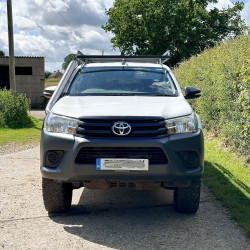
OFM4x4 lists a Land Cruiser 80 stainless snorkel kit and separate Hilux MK8 mid-entry and short-entry kits. These are different applications and routing choices, not proof of universal interchangeability.
Provide year, engine, body variant and airbox details before ordering. Confirm the supplied fittings, cutting template, connection arrangement and installation requirements for the chosen option. Do not cut the wing until the complete application is confirmed.
Keep the vehicle’s limits separate from intake height
Consult the vehicle handbook and manufacturer guidance for permitted wading conditions. Other systems, ventilation openings and vehicle stability can limit what is suitable even when the intake path is correctly assembled. Unknown depth, current or a damaged surface is a reason to avoid the crossing.
Can I prove the seal by blocking the running intake?
Do not perform that improvised test. Ask the installer for an appropriate assessment method for the vehicle and kit.
Does a snorkel make floodwater safe to drive through?
No. Avoid floodwater and choose another route. Intake height does not address current, hidden damage or the vehicle’s other limitations.
What if water ingestion is suspected?
Stop and obtain professional help. Do not keep cranking an engine that may have ingested water.
Confirm the intake connection before ordering
Contact OFM4x4 with the vehicle, engine and airbox details, plus the proposed snorkel kit. Include photographs of modified intake components so the connection requirements can be checked.
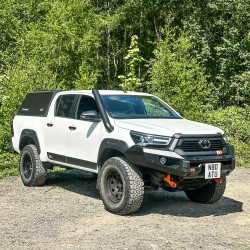
Main image: genuine stainless snorkel catalogue photograph. It illustrates the intake hardware, not a certified water-sealing test or approved wading depth.
Related Products



Leave a comment