


-32x32h.jpg)


-32x32h.jpg)

-32x32h.jpg)


-1000x1000h-32x32.jpg)


-32x32.png)


-32x32w.jpg)



-1000x1000w-150x150.jpg "DT Adventure Portable Camping 55L Compressor Car Fridge Freezer")
-1000x1000w-150x150.jpg "DT Adventure Portable Camping 55L Compressor Car Fridge Freezer")



Published 27 September 2026 · OFM4x4.CO.UK
Do You Need an Adjustable Panhard Rod After a 4x4 Lift?
A suspension lift changes the position at which a solid axle sits relative to the chassis. On a vehicle located laterally by a panhard rod, the original fixed-length rod can pull that axle slightly to one side as ride height increases. The result may be visible as unequal tyre-to-arch clearance or an axle that no longer sits centrally under the body.
There is no honest one-size-fits-all answer based on lift height alone. The axle layout, actual ride height, load, tyre clearance and components already in the kit matter. Here is how to decide whether an adjustable rod belongs on your build.
The quick answer
If your 4x4 has a panhard-located live axle and the axle is measurably off-centre at its normal loaded ride height after a lift, the correctly specified adjustable rod can bring it back towards the centre. Check whether your lift kit already includes one. A panhard rod is one part of suspension setup; it does not replace caster correction, a wheel alignment, or checks of brake hoses and other parts at full travel.
In this guide
What the panhard rod does
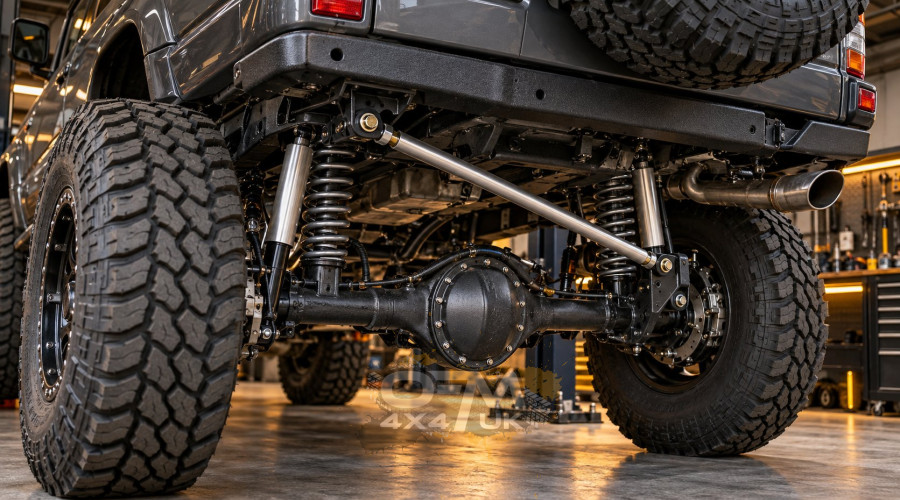
A panhard rod, sometimes called a track bar, links one side of a solid axle to the opposite side of the chassis. Its job is to limit side-to-side axle movement while the suspension travels. Some 4x4s have one at the rear, some at the front and rear; an independent front suspension layout does not use a front live-axle panhard rod. Identify your vehicle's actual axle arrangement before shopping.
Manufacturers including Ironman 4x4 describe their adjustable versions as a way to re-centralise the axle. The exact part, side and compatible lift range are vehicle-specific.
Why an axle moves sideways after a lift
The rod swings through an arc as the axle moves up and down. Raising the vehicle changes its normal position on that arc. With a fixed-length rod, the axle may therefore sit to one side at the new static ride height. The amount is not a universal number for a 50 mm or 75 mm lift: rod length and angle, actual lift achieved and vehicle loading all affect it.
A visual impression from one wheel arch can mislead because body panels, wheel offsets and tyre sizes may differ. Measure from repeatable chassis and axle points on level ground rather than ordering solely from a photograph.
When an adjustable rod is useful
It is most useful when a lifted, panhard-located axle is off-centre and the suspension manufacturer specifies an adjustable rod for your vehicle and lift. It may also be part of a complete lift kit. On modest lifts the shift can be small; the decision should follow measurement and the kit maker's instructions, not a blanket rule that every 2-inch lift needs two rods.
If your kit already contains front and rear adjustable rods, do not add duplicates. If it contains only springs and shocks, check the complete geometry requirements with the supplier. Superior Engineering's technical FAQ explains the lateral-location role of the factory rod and why a longer or adjustable replacement can be needed on lifted five-link applications.
What it cannot fix
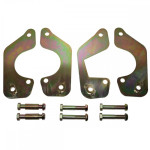
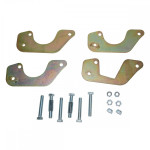
Length adjustment centres the axle at a chosen ride height. It does not by itself restore the original rod angle or eliminate the axle's lateral movement throughout suspension travel. Some builds use a model-specific relocation or correction bracket as part of their geometry solution; bracket design and installation must suit the vehicle.
It also does not restore front caster, correct a steering wheel position caused by another adjustment, lengthen brake hoses, resolve tyre rubbing or make an overloaded vehicle compliant. A lifted 4x4 needs the whole suspension, steering and brake system checked together. A steering damper is not a cure for incorrect geometry.
How to check before ordering
- Confirm the exact vehicle, year, axle layout, front/rear position and whether the vehicle has special equipment such as KDSS or ABS that changes the required kit.
- Park on level ground at the weight in which you normally drive. Set tyre pressures correctly and let the suspension settle.
- Measure left and right from equivalent points on the chassis to the axle, then check wheel and tyre clearance on both sides. Repeat the measurements rather than relying on the body arch alone.
- Check the lift kit's parts list for an included rod or correction bracket and follow the manufacturer's specified compatible lift range.
- Have a competent installer adjust and secure the rod to the maker's instructions, then inspect clearance through steering and suspension travel and perform the appropriate alignment checks.
If measurements conflict or a vehicle has a mixed suspension setup, send us photographs of both axle mounts and the existing kit details before choosing a part.
Examples from the OFM4x4 range
These are examples of how complete kits treat axle centring, not claims that one kit fits another vehicle:
- The Tough Dog +50 mm Nissan Patrol Y61 kit lists an adjustable panhard rod among recommended add-ons rather than in its stated main contents.
- The Tough Dog +100 mm Patrol Y61 kit lists adjustable front and rear panhard rods in its component specification.
- The Tough Dog +75 mm Land Cruiser 80 kit also lists adjustable front and rear rods.
Check the current product specification before ordering, especially vehicle variant, load rating, ABS configuration and what is included. For spring choice alongside geometry, read our spring load ratings guide.
Common questions
Does every 50 mm lift need an adjustable panhard rod?
No single lift-height rule covers every vehicle. Inspect the axle position, the manufacturer recommendations and the actual kit contents. A measurable offset can justify correction even where the vehicle remains driveable.
Will it fix a vehicle pulling to one side?
Do not assume so. Pulling can have several causes, including tyres, brakes and alignment. Centre the axle as part of a complete diagnosis rather than using rod length to mask another fault.
Can I adjust it without checking the rest of the suspension?
No. The rod and its mounts must be secured to the manufacturer's instructions, and brake hoses, wiring, tyres, steering and other components need clearance at full travel. Arrange alignment and professional inspection where appropriate.
Need the right geometry parts? Tell OFM4x4.co.uk your vehicle model and year, measured ride height, existing lift kit and accessories. We can identify which parts are specified for your build before you order.
Related Products


Leave a comment