


-32x32h.jpg)


-32x32h.jpg)

-32x32h.jpg)


-1000x1000h-32x32.jpg)


-32x32.png)


-32x32w.jpg)



-1000x1000w-150x150.jpg "DT Adventure Portable Camping 55L Compressor Car Fridge Freezer")
-1000x1000w-150x150.jpg "DT Adventure Portable Camping 55L Compressor Car Fridge Freezer")

-150x150h.jpg "Fabryka 4x4 Front Winch Bumper with Bullbar Toyota Land Cruiser HZJ 71 99-07")
-150x150h.jpg "Fabryka 4x4 Front Winch Bumper with Bullbar Toyota Land Cruiser HZJ 71 99-07")


Published 3 October 2026 · OFM4x4.CO.UK
Rooftop Tent Roof Load Ratings: Dynamic vs Static Explained
A rooftop tent might be listed as suitable for a 4x4, yet that does not establish whether your particular vehicle, rack and mounting kit can carry it. The first question is what the whole assembly weighs while driving. The second is whether the parked setup is approved for the people sleeping in it.
This guide turns roof-load ratings into a practical pre-order check. The numbers in the worked example are hypothetical; confirm the current instructions for your exact vehicle and hardware before fitting anything.
The quick answer
The lowest applicable vehicle, fitting-kit and rack limit governs the driving load. Subtract the rack, tent, mounts and any other carried accessories from that limit. Check the approved parked load separately; do not multiply a vehicle’s driving limit by three unless its manufacturer confirms that method for that vehicle.
In this guide
Find the lowest approved limit
Collect four pieces of information before choosing a tent: the vehicle maker’s roof-load limit, the rating and permitted attachment method for the vehicle-specific fitting kit, the rack or bars’ load rating, and the tent maker’s mounting requirements. Roof rails, crossbars and a platform are separate parts of the system.
Yakima’s load-rating guide illustrates the governing principle: the component with the lowest relevant limit sets the system ceiling, and the carrying system’s own weight uses some of that allowance. A rack labelled 150kg does not increase a vehicle roof approved for 100kg. Check whether each quoted figure means total load or additional payload; product listings are not always consistent about that distinction.
Use the owner’s manual and the rack maker’s vehicle-specific fitting instructions. A tent’s own occupant capacity describes the tent, not an automatic approval for the roof beneath it. If any limit or permitted mounting position is unclear, obtain written clarification before ordering.
Calculate the driving load
Dynamic load applies while the vehicle is moving. Add the installed weight of everything on the roof: platform or bars, feet and brackets, closed tent, any permitted bedding stowed inside, awning, mounts and other cargo. Then compare that total with the lowest approved driving limit. Thule’s rooftop tent rack guidance likewise says the rack must support the combined weight of rack and tent while driving.
Here is an illustrative calculation, not a fitment recommendation. Suppose the verified governing driving limit is 100kg. The rack and fittings weigh 22kg, the tent and its mounting hardware 65kg, and an awning with brackets 8kg. Total roof load is 95kg, leaving 5kg against that particular on-road limit. Additional roof cargo would exceed it. A different vehicle or fitting kit could have a lower limit and fail the check entirely.
| Illustrative item | Weight | Check |
|---|---|---|
| Rack and fittings | 22kg | Installed, not shipping weight |
| Tent and mounts | 65kg | Include items carried inside |
| Awning and brackets | 8kg | Include even if folded |
| Total / allowance left | 95kg / 5kg | Against hypothetical 100kg limit |
Do not use a narrow margin as a reason to ignore missing weights. Request the actual installed mass and account for accessories rather than relying on a tent’s marketing headline.
Check the parked setup
Static load applies when the vehicle is stationary and people are inside the tent. Count occupants and equipment alongside the tent and rack, then check the specific approved parked-load guidance for the vehicle, mounting system, rack and tent. Verify any instructions on level parking and ladder placement. A tent rating alone does not certify every supporting vehicle.
Yakima describes a three-times multiplier as a general rule of thumb for some components, but explicitly says to confirm whether it applies to the particular vehicle roof. Treat an unsupported “100kg while driving means 300kg parked” calculation as unresolved, not as permission to sleep on the roof.
Check mounting and rough-road use
Confirm bar spread, minimum number of supports, tent-rail orientation, clamp clearance and approved roof mounting points. Thule notes that not every rack design is recommended for tent use, even if its ordinary cargo rating looks sufficient. Follow the actual tent and rack manufacturers’ instructions for fasteners, torque and inspection after use.
Off-road load allowances may be lower than on-road figures. Yakima’s guide specifies reductions for its own arrangements; the percentage depends on the vehicle roof type and mounting system. Do not apply a generic reduction to another brand, or assume an on-road result also approves rough tracks. Ask the manufacturer or installer for the applicable figure and route-specific guidance.
Secure remaining cargo independently. Roof weight also raises the vehicle’s centre of gravity, so drive with the manufacturer’s guidance for loaded vehicles in mind. A suspension lift does not change the roof’s approved capacity.
Compare the actual components
The following OFM4x4 listings illustrate different parts of a roof-tent setup. They are not a confirmed compatible package for an unspecified vehicle.
- DT Adventure Extreme Fibreglass Hard Shell Rooftop Tent v2: the listing shows a weight entry of 80kg and calls for a suitable load-rated rack or platform. Confirm the installed tent weight, mounts, allowed bar spread and the supplied version before doing your calculation.
- IOD Performance Aluminium Roof Rack for Nissan Patrol Y60 LWB: a vehicle-specific gutter-mounted rack listing. Obtain its numerical on-road, off-road and parked ratings and confirm the Y60 LWB roof limit; the description does not supply a universal payload figure.
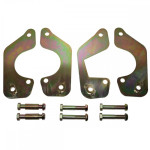
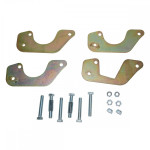
- IOD Performance Rooftop Tent Mount for IOD Roof Racks: listed with two crossbars, four mounting plates and bolts. Check its exact rack and tent compatibility and whether additional supports are required for your tent.
Our roof rack and load bar buying guide covers rack styles and other choices. The load worksheet here is the step to complete before deciding that a particular combination fits.
Common questions
Does a 75kg roof rating allow a 75kg tent?
Usually that simple comparison is incomplete: the rack, feet, fittings and anything else on the roof also contribute to the driving load. Check the vehicle and rack instructions and the exact installed weights.
Can occupants make the parked load higher than the driving limit?
That may be permitted for an approved roof-tent setup, but the vehicle, rack, fittings and tent instructions must support the proposed parked load. Do not infer a vehicle-specific figure from a general multiplier.
Does a platform rack guarantee compatibility?
No. Confirm the platform’s rating, vehicle fit, tent rail and clamp dimensions, permitted attachment points and the maker’s approval for tent use.
Need a roof-load check before ordering?
Contact OFM4x4 with your vehicle make, model, year, roof type, rack and tent part numbers and intended accessories. We can identify which manufacturer figures still need confirmation before you commit to a setup.
Related Products


-250x250h.jpg "IOD Performance RoofTop Tent Mount for IOD Roof Racks")
Leave a comment