









Published 19 October 2026 · OFM4x4.co.uk
A recovery can become a long pull very quickly. Deep mud, repeated repositioning and a difficult anchor may keep a winch working far longer than a short demonstration.
The useful question is whether the complete recovery can be managed within the winch's operating instructions. A headline pulling rating does not tell you how long its motor can run continuously.
Treat electric recovery winches as intermittent equipment unless their own instructions explicitly say otherwise. Plan cooling pauses, watch the recovery continuously and stop for abnormal operation. Do not borrow a run-and-rest timetable from another model.
Understand intermittent duty
WARN's basic guide explains that prolonged operation builds motor heat and that continued winching without cooling can damage the motor. This is a reason to plan pauses before starting, rather than wait for a thermal cut-out.
Read the manual for the precise winch fitted to your vehicle. Motor, brake, rope and control arrangements differ. A cooling interval printed for another brand or an older model is not a specification for yours.
Write a recovery plan
Before tensioning the rope, agree who operates the controls, who monitors progress and how everyone signals a stop. Identify where the vehicle can be safely secured if the pull must pause.
Include an alternative if the recovery is taking longer than expected: reassess the route, remove an obstruction where safe, or obtain trained recovery assistance. Repeating the same struggling pull is not a plan.
Recognise reasons to stop
Stop for a stationary drum under power, smoke, a burning smell, an unusual mechanical noise, damaged equipment or a warning reported by the winch. Keep people clear and secure the vehicle before investigating.
A thermal protection feature, where fitted, is a last protection rather than a target to reach. Do not bypass it or assume an automatic restart means the entire recovery system is ready.
Use pauses productively
Record the length of each operating period and the conditions, without treating a stopwatch as proof of safe temperature. Check the manual's limits and indications throughout the work.
Cooling pauses also give the operator time to reassess rope routing, the anchor and vehicle movement from a safe position. Never approach a tensioned line to make an adjustment.
Keep a useful operating record
Note the winch model, rope type, date, observed warning and what the vehicle was doing. Distinguish a motor warning from a control fault or battery problem; symptoms can look similar.
An example record could say: 'Long uphill mud recovery; motor warning displayed; stopped and secured vehicle; operation not resumed until manual requirements met.' This is more useful to a supplier than 'winch weak'.
| Observation | Action |
|---|---|
| Motor or controller warning | Stop and follow the exact model instructions |
| Drum stationary while powered | Release the control; secure and reassess the recovery |
| Cooling pause needed | Keep the vehicle secure and the line area clear |
Choose the next step
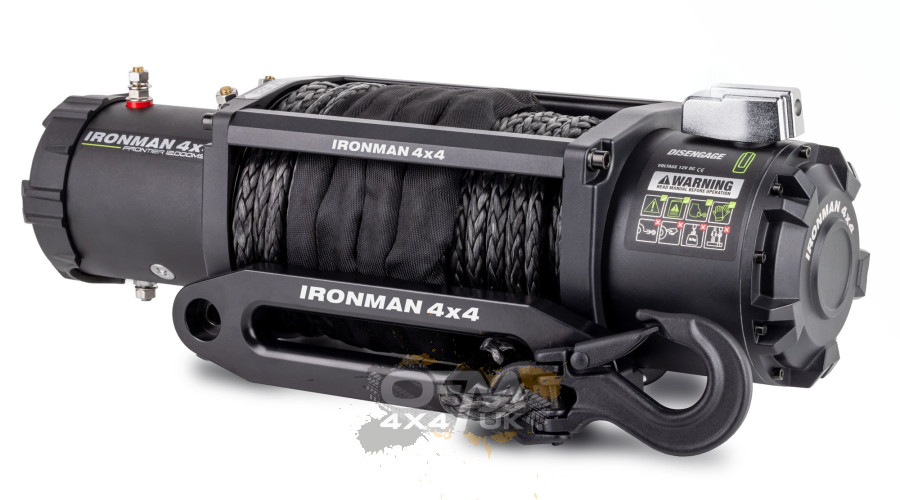
The related Ironman winches are examples of different rope and capacity configurations, not evidence that any model can operate continuously. Confirm the relevant operating instructions before choosing or replacing equipment.
Send OFM4x4.co.uk your winch model and a description of the recovery duty if you need help identifying suitable equipment or the correct documentation.
Manufacturer and reference information
References checked 12 October 2026. Follow the instructions for the actual equipment; examples from another brand do not establish its limits.
Related Products


Leave a comment