








Published 25 October 2026 · OFM4x4.co.uk
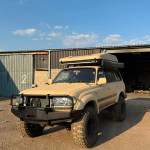
A newly fitted suspension can look uneven on a sloping drive, or change its stance when touring equipment is moved. That does not by itself prove a spring is defective.
Use a repeatable measurement and configuration record before buying a corrective spacer. The aim is to give the installer enough evidence to distinguish the ground, the load and the installation.
Measure on level ground using the fitter's consistent reference points, record the load and compare with the installation record. Check the exact springs' side designations and application. Do not assume equal free lengths, equal arch gaps or an added spacer are the correct answer.
Remove misleading comparisons
Use the same level location and vehicle configuration for each comparison. Record tyre condition and pressures, fuel level where relevant, and luggage or permanent accessories.
A photograph is useful context but an arch gap viewed from different angles is a poor measurement. Ask the workshop to define repeatable points and record each corner using the same method.
Compare with the fitting record
Request the measurements taken before and after installation. A new observation is more useful when it can be compared with the fitter's original reference.
Ironman's troubleshooting guidance advises checking level ground and load distribution, then reviewing the installation measurements. Follow the guidance for the exact system rather than impose a universal permitted side-to-side difference.
Check spring identity and position
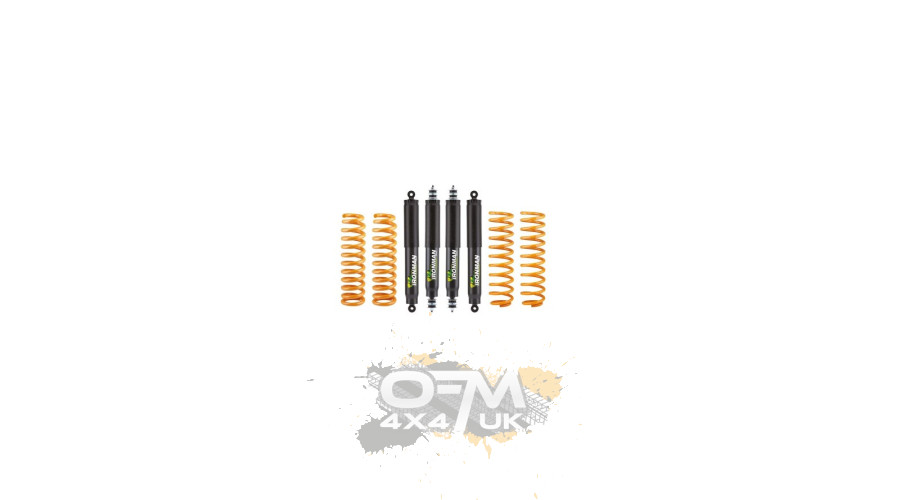
Confirm part numbers and any driver-side or passenger-side marking in the actual kit instructions. Some applications use different spring specifications to address vehicle weight distribution.
Do not swap springs because one appears taller on the bench. The correct location depends on the design and application, and spring identification should be checked by the installer.
Inspect the installation properly
Have the fitter check spring seating, insulators and applicable bushed mounts alongside the vehicle condition. Avoid reaching into loaded suspension or attempting to reposition a spring at home.
Provide a description of any associated knock, rubbing or steering change. A visual lean and a new mechanical symptom deserve inspection rather than a cosmetic correction.
Avoid a spacer-first diagnosis
A spacer changes position without necessarily correcting the reason for the lean. It also needs to be considered as part of the complete suspension and its available travel.
Ask the supplier to review the evidence before proposing an adjustment. Do not combine parts from different systems or add height beyond the kit's intended configuration without a documented compatibility check.
| Record | Use |
|---|---|
| Four corner measurements | Repeatable comparison |
| Load configuration | Explains changes between measurements |
| Spring numbers and markings | Checks intended application and position |
| Installation measurements | Provides the original reference |
Send a clear support enquiry
Include vehicle details, spring and shock part numbers, fitting date, four measurements, ground location and the recorded load. Attach clear photos of the stance and any visible markings without working under an unsupported vehicle.
OFM4x4.co.uk can help identify the intended parts and documentation. Diagnosis and any corrective work should be completed by a suitably equipped fitter.
Manufacturer and reference information
References checked 12 October 2026. Follow the instructions for the actual equipment; examples from another brand do not establish its limits.
Related Products


Leave a comment