






Published 28 October 2026 · OFM4x4.co.uk
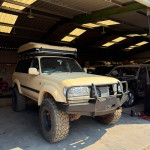
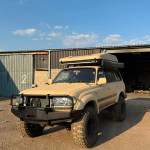
The original vehicle height in a handbook no longer describes a 4x4 with a lift, different tyres and equipment above the roof. Even a small removable accessory may become the highest point.
Create a height record for the vehicle as it will travel. It is a practical planning measurement, not a guarantee that every signed entrance or sloping ramp is safe.
Measure to the highest fitted or carried point on level ground, then record the exact configuration. Recheck after changing tyres, suspension or roof cargo. Confirm the entrance's current restriction and use another route when clearance is uncertain.
List the height changes
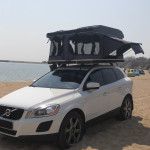
Include racks, roof tents, stored awnings, aerials, cargo and removable mounts. Inspect the complete packed vehicle rather than the empty rack.
Rhino-Rack fitting charts identify height added by particular rack systems. Such figures are application-specific and do not include every item you may place on top.
Measure the travelling configuration
Use a safe method with a level reference across the highest point and a measurement down to level ground. Work with a helper if needed; do not climb onto equipment that is not designed to support you.
Keep the normal travelling suspension configuration and record the cargo. Measure the actual result rather than sum uncertain catalogue dimensions or assume a lift kit raises every point by its stated amount.
Make the record visible
Write down the date, measured height, units and equipment list. A discreet note accessible to the driver can help prevent reliance on a remembered standard vehicle figure.
Add a photograph of the complete configuration. If a detachable aerial or cargo box is removed, identify which height record now applies rather than cross out the figure without explanation.
Check the entrance before arrival
For booked parking, storage or ferry access, check the operator's current dimensions and equipment restrictions. Height acceptance can be separate from restrictions on roof loads or trailers.
Parclick advises checking each car park's accepted dimensions and maximum height before booking. A search result for the location is less useful than the current operator information and signs on arrival.
Treat uncertainty as a stop
Approach unfamiliar restrictions so you can stop and choose a safe alternative. Slopes, overhead services and equipment protrusions can make the physical route more complicated than one nominal figure.
Do not test clearance by driving until an accessory touches the barrier. If the arrangement is too close to judge confidently, use a suitable alternative entrance or car park.
| Configuration | Record separately |
|---|---|
| Daily vehicle with rack | Measured highest point |
| Touring vehicle with packed cargo | Updated measurement and cargo list |
| After tyre or suspension change | New reference measurement |
| Specific destination | Operator restriction checked for that journey |
Update after a change
Recheck after changing tyres, suspension settings, racks or cargo. Include temporary equipment fitted for only one trip, which is easy to forget during everyday driving.
For rack selection, give OFM4x4.co.uk your vehicle and intended equipment. Ask for the exact fitting dimensions, then verify your complete installed height yourself.
Manufacturer and reference information
References checked 12 October 2026. Follow the instructions for the actual equipment; examples from another brand do not establish its limits.
Leave a comment