







Published 28 September 2026 · OFM4x4.CO.UK
Nissan Patrol Y61 Sway Bar Links After a Lift: 2-Inch Fitment Guide
A 2-inch suspension lift on a Nissan Patrol Y61 changes more than the gap above the tyres. The anti-roll bars, also called sway bars or stabilisers, work through links whose position changes as the suspension moves. Before ordering longer links, you need to identify the axle, the actual lift and, particularly at the rear, the stabiliser system fitted to your vehicle.
The easy mistake is buying a kit because the description says “Y61” and “2-inch”. Front and rear kits are different, and a rear kit intended for a conventional stabiliser is not automatically compatible with a factory disconnectable system. This guide explains the buying checks for a nominal 50 mm suspension lift.
The quick answer
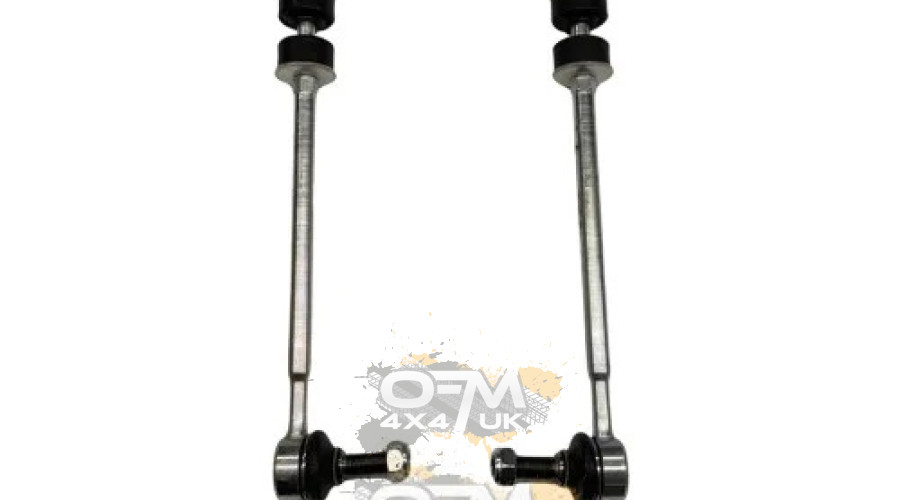
Choose links by front or rear position, actual suspension lift and stabiliser type. OFM4x4 lists IOD-00S34 for the Y61 front with a +2-inch lift, and IOD-00S37 for the rear with a +2-inch lift without the factory electrically disconnectable stabiliser. Do not use that rear listing as confirmation for an electric-disconnect vehicle. Check the fitted hardware and the manufacturer's application before ordering.
In this guide
Why check sway bar links after a lift?
The anti-roll bar resists the difference in suspension movement between the two sides of an axle. Its links transmit that movement between the bar and its mounting points. A suspension lift changes the relationship between the chassis and axle, so the original link arrangement needs checking at the new ride height and through suspension travel.
The aim is a suitable working position and enough clearance throughout movement. Longer is not automatically better: an unsuitable link can create interference elsewhere. Likewise, a change in bar angle does not by itself prove that the bar is preloaded. Avoid treating every lifted Patrol as if it has the same geometry or fitting parts simply to make the bar look level in a photograph.
Front and rear fitment at a glance
These are the applications stated in the current OFM4x4 listings. They are a shortlist for checking your vehicle, not a substitute for identifying its existing mounts.
| Position and setup | Listed option | Key fitment check |
|---|---|---|
| Front, +2-inch suspension lift | IOD Performance IOD-00S34 front link kit | Front application; confirm mounts and the lift actually fitted. |
| Rear, +2-inch lift, conventional non-electric stabiliser | IOD Performance IOD-00S37 rear link kit | Excludes the factory electrically disconnectable stabiliser. |
| Front, +2-inch lift, disconnect function wanted | Superior Engineering Y61 GU front disconnects | Different function from a fixed link. Confirm the exact application and follow the maker's fitting and use instructions. |
| Rear with a factory disconnectable or previously converted system | Confirm the system before selecting a kit | Send photographs of both links, the actuator and mounts. Do not substitute IOD-00S37. |
Identify the rear stabiliser system
A Patrol's badge or registration year alone is not enough to choose its rear links. Inspect the hardware on both sides and check whether the factory disconnect mechanism is still fitted, has failed, or has already been replaced. A non-working disconnect does not turn the existing assembly into a conventional non-electric setup.
Terms such as “electric disconnect”, “hydraulic stabiliser” and “Stabi-Off” can be used when discussing different rear arrangements or replacement solutions. Do not assume that an Australian-market application and a UK or European vehicle have identical mounting hardware merely because both descriptions mention a disconnect. Record the current link lengths, mounting style and actuator arrangement.
If you intend to replace a factory disconnect system with fixed links, treat this as a specific conversion. Confirm which components and brackets are required, whether the disconnect function is retained, and which lift height the complete solution supports. A standard rear-link listing is not evidence that it supplies a complete conversion.
Extended links versus disconnects
Extended replacement links are selected to suit the lifted application while keeping the anti-roll bar connected. Disconnect links add a means of detaching the bar for appropriate off-road use. These are different buying decisions: a 2-inch lift does not automatically mean you need a disconnect function.
Superior Engineering describes its GU disconnect range as vehicle-specific and lists separate lift options. That does not establish universal compatibility with every Y61 rear system. Use the exact front or rear product specification, and reconnect and secure any disconnectable bar as instructed before returning to road use.
Six checks before ordering
- Identify the vehicle: supply the year, Y61 GU/GR model, body style and details of any previous suspension conversion.
- Confirm the axle: say whether you need front links, rear links or both. Do not assume a pair covers the whole vehicle.
- Identify the rear system: photograph both sides, including any actuator and the upper and lower mounts.
- Describe the lift: give the spring and shock details, nominal lift and any spacers or relocation brackets already fitted. A body lift alone is not the same as a suspension lift.
- Check dimensions: compare the mounting arrangement, bolt diameter, bracket width and relevant link measurement with the supplier's drawing. Use centre-to-centre dimensions where both ends have bolt eyes; a pin-ended link requires the specified reference points.
- Confirm the intended use: decide whether you want connected replacement links or a disconnect system, and confirm the contents of the exact kit.
Take measurements at the vehicle's normal loaded ride height on level ground. If dimensions or photographs disagree with the application listing, resolve that mismatch before ordering.
Fitting and clearance checks
Have a competent installer follow the instructions for the specific links and suspension kit. Check the bar, joints and fasteners at normal ride height, then inspect their movement through the available compression and droop. At the front, include the steering range. Look for contact with tyres, springs, dampers, brake hoses, wiring and nearby components; do not force a link into place to overcome a mismatch.
Use the specified fastener torques, bush assembly and any required recheck interval. There is no single torque value or universal bar angle that should be applied to every link in this guide. Safe support and controlled suspension movement are essential during inspection.
Sway bar links do not centre the axle or correct caster. They should not be sold as a cure for every knock, steering pull or vibration after a lift. Diagnose those symptoms separately. For the wider setup, read our adjustable panhard rod guide and spring load ratings guide.
Common questions
Does every Y61 with a 2-inch lift need the same links?
No. Front and rear positions, the rear stabiliser mechanism, the actual suspension configuration and existing modifications all matter. Check the application and clearances rather than ordering solely by lift height.
Should I simply add 50 mm to the original link length?
No. A nominal 50 mm suspension lift is not an instruction to lengthen every link by exactly 50 mm. Use the link manufacturer's specified application and dimensions.
Can I use the non-electric rear kit if my electric disconnect has stopped working?
Not on that basis. The IOD-00S37 listing excludes the factory electrically disconnectable system. Identify the existing assembly and confirm a suitable repair or complete conversion.
Will longer links fix vibration or steering wander?
Do not assume so. A link fitment check is one part of inspecting a lifted vehicle. Steering, tyres, alignment, worn components and driveline geometry may require separate diagnosis.
Need help choosing the correct links? Contact OFM4x4.co.uk with your vehicle details, lift-kit specification and clear photographs of the existing links and rear stabiliser. We can check the application before you order.
Fitment references: the linked OFM4x4 product specifications and Superior Engineering's vehicle-specific disconnect range. Confirm the exact part and current installation instructions for your vehicle.
Related Products


Leave a comment