


-32x32h.jpg)


-32x32h.jpg)

-32x32h.jpg)


-1000x1000h-32x32.jpg)


-32x32.png)


-32x32w.jpg)





-1000x1000w-150x150.jpg "DT Adventure Portable Camping 55L Compressor Car Fridge Freezer")
-1000x1000w-150x150.jpg "DT Adventure Portable Camping 55L Compressor Car Fridge Freezer")


Published 9 October 2026 · OFM4x4.CO.UK
The number on a winch label is not a promise of identical pulling capacity with a full drum. Rope builds up around the drum as it is recovered, changing the leverage available at the line.
Understanding drum layers helps you read specifications properly and recognise a recovery that needs a different plan. It does not replace training, the winch manual or an assessment of the whole recovery system.
The quick answer
The advertised maximum line pull is commonly a first-layer rating: the layer closest to the drum. As the effective drum radius increases, available line pull decreases. Use the exact winch’s layer table and preserve its required minimum wraps; never unwind below the manual’s limit to chase the headline capacity.
In this guide
What a drum layer means
A layer is a course of rope wound around the drum. The first sits nearest the drum surface; later layers sit over it. A full drum therefore pulls through a larger effective radius than a nearly unwound one.
WARN explains pulling capacity by layer and the first-layer basis of maximum ratings. That principle explains why the label alone is incomplete. The actual figures and permitted rope arrangement must come from your model’s documentation.
Why capacity changes
For a given drum torque, line force falls as the effective radius rises. The motor and gearing have not suddenly changed; the rope is working farther from the drum’s centre. Layer thickness and drum dimensions affect the result.
Do not estimate an outer-layer capacity from another brand’s percentage reduction. Different winches, rope diameters and drum geometries produce different tables. Ask for the manufacturer’s figures if the listing only gives one maximum number.
| Specification | Question to ask |
|---|---|
| Rated line pull | Which layer and test conditions apply? |
| Layer table | What capacity is available on subsequent layers? |
| Rope arrangement | What diameter, length and minimum wraps are specified? |
| Electrical requirements | What installation and battery requirements apply? |
Vehicle mass is not the entire recovery load
A vehicle rolling on firm ground and the same vehicle deeply bogged in mud are different loads. Gradient, suction, obstacles and whether wheels can turn affect resistance. The loaded vehicle mass is useful information, but it cannot tell you the exact required pull by itself.
Assess whether the vehicle can be made easier to recover before pulling. If the required force is uncertain or the equipment cannot be kept within its limits, stop and change the plan. A larger headline rating does not make an unsuitable anchor or recovery point acceptable.
Keep the specified minimum wraps
The line attachment at the drum is not a substitute for the required wraps. Read the winch and rope instructions together. Synthetic rope and wire rope arrangements can have different requirements, so use the actual manual rather than a remembered rule from a different winch.
Plan the anchor distance and rope deployment before applying load. Follow the approved spooling procedure so the line is stored correctly. Keep hands away from the fairlead and loaded line, and maintain the exclusion area specified in the recovery instructions.
Compare complete specifications
OFM4x4’s synthetic-rope winch range includes Ironman Frontier 9,500lb and 12,000lb models and the Epik Dual RS Speed 13000lb winch. These are catalogue alternatives; the numbers are not a verified ranking for every drum layer.
Compare the layer table, mounting dimensions, duty instructions, electrical installation and supplied rope specification. For a dual-speed model, confirm the permitted operating mode under load. Do not assume a faster mode has the same pulling capability.
Common winch-rating questions
Should I pull all the rope out for maximum power?
No. Preserve the specified minimum wraps and follow the manual’s deployment limits. Capacity must never be pursued by defeating the rope retention requirements.
Does adding a pulley simply double everything?
Rigging changes forces at the winch, anchor and recovery points. Friction and geometry matter. Use manufacturer-approved methods and correctly rated equipment with trained guidance.
Is the rating a lifting capacity?
Do not use a vehicle recovery winch for lifting or suspending loads unless its manufacturer explicitly approves that use. A recovery line-pull figure does not provide that approval.
Ask for the figures behind the label
Contact OFM4x4 with your loaded vehicle details and proposed mounting arrangement. Request the exact model’s layer ratings and installation instructions before selecting a winch.
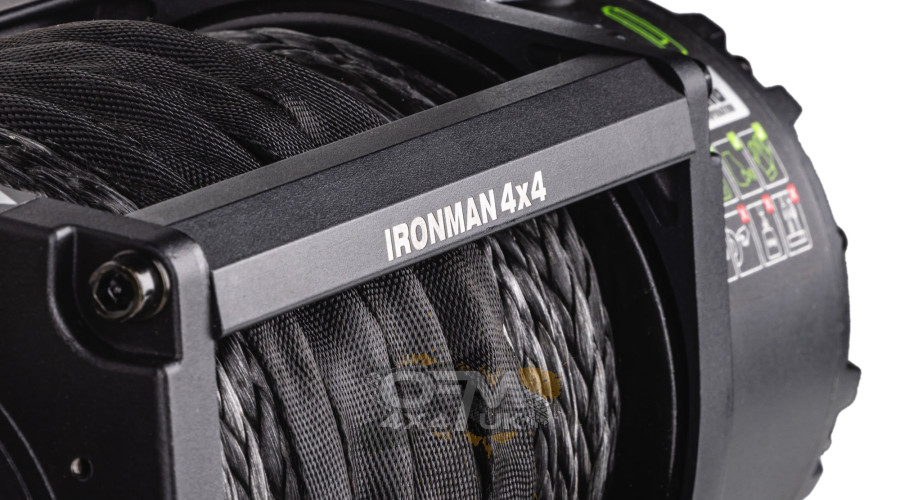
Main image: genuine winch catalogue photograph, illustrating the equipment rather than a measured recovery load.
Related Products


Leave a comment