


-32x32h.jpg)


-32x32h.jpg)

-32x32h.jpg)


-1000x1000h-32x32.jpg)


-32x32.png)


-32x32w.jpg)



-1000x1000w-150x150.jpg "DT Adventure Portable Camping 55L Compressor Car Fridge Freezer")
-1000x1000w-150x150.jpg "DT Adventure Portable Camping 55L Compressor Car Fridge Freezer")


Published 10 October 2026 · OFM4x4.CO.UK
A puncture kit can be useful on a remote trip, but it cannot make every damaged tyre safe to use. The visible nail or screw is only part of the problem: a tyre driven with insufficient pressure may have damage you cannot see from outside.
The useful question is not simply whether a plug will stop the air leak. It is whether the damage is suitable for repair and what must happen before the tyre returns to normal service.
The quick answer
For normal service, have the tyre removed and inspected by a qualified tyre specialist. External string plugs cannot establish the condition inside the casing. Do not attempt a plug repair on sidewall or shoulder damage, a bulge, a cut, exposed cords or suspected damage from running flat. Use a suitable spare or recovery assistance when repair suitability is uncertain.
In this guide
Why internal inspection matters
Michelin’s tyre-repair guidance explains that repair decisions require an internal inspection. Driving at very low pressure can damage the tyre even when the visible puncture looks small. Stopping the leak does not reveal that damage.
Tell the tyre specialist how far the vehicle travelled after pressure loss, whether it was heavily loaded and what emergency treatment was used. A plug that appears to hold overnight is not evidence that the casing remains sound.
Recognise damage a roadside kit cannot resolve
A screw in the central tread and a gash near the sidewall are different problems. The location, size, direction and tyre condition all influence repair suitability. Apply the tyre manufacturer’s requirements through a qualified repairer rather than using a universal hole-size rule.
| Finding | Practical response |
|---|---|
| Small visible tread puncture | Arrange professional inspection; repairability is not yet established |
| Shoulder or sidewall damage | Do not attempt an external plug repair |
| Bulge, cords or substantial cut | Stop using the tyre and obtain specialist help |
| Tyre run flat or severely underinflated | Require internal assessment even if the leak can be stopped |
Michelin’s sidewall advice describes why cuts and bulges need specialist attention. A repair kit does not replace the structure of the casing.
Keep emergency treatment separate from permanent repair
Michelin discourages outside-only wick repairs as a permanent solution and describes them as an emergency last resort. Any emergency method must also be permitted by the tyre and kit instructions. If you have a usable spare and can change it safely, that avoids guessing about repairability at the roadside.
Where an approved emergency treatment is used, follow its limits and arrange inspection promptly. Do not turn a temporary stopgap into a planned long journey, towing operation or normal motorway use. If pressure falls again, stop rather than repeatedly adding air to continue.
Choose a kit for the actual tyre construction
Check whether the kit is intended for your tyre construction. A tubeless plug kit is not a tube repair kit. ARB describes its Speedy Seal kit for tubeless tyres; the supplied procedure and limitations still govern its use.
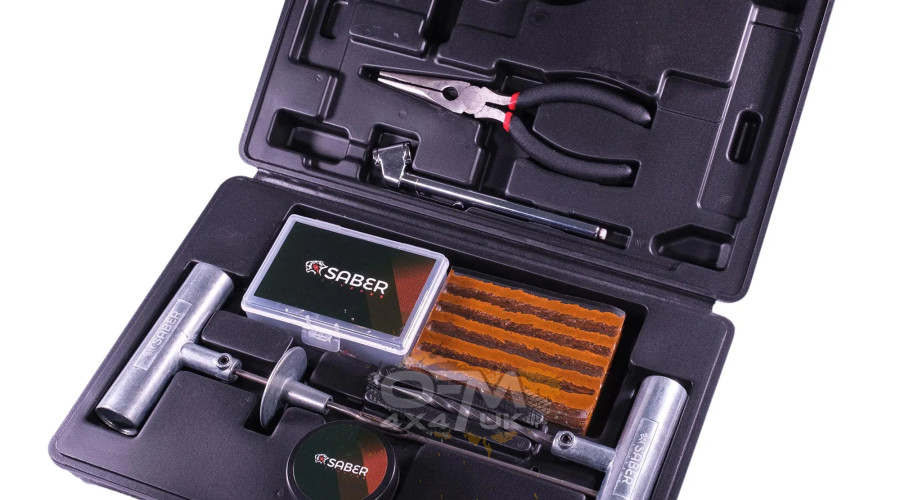
OFM4x4 lists the ARB Speedy Seal Series Repair Kit and Saber Tyre Repair Kit. Compare the current contents, instructions and consumables rather than assuming similarly named kits are identical.
Prepare the rest of the puncture plan
Carry an accurate pressure gauge, a suitable inflation source, a usable spare and the equipment required to change a wheel safely. Check the spare’s pressure, condition and fitment before departure. Store kit consumables as instructed and replace damaged or deteriorated items.
A compressor can restore pressure only if the tyre is otherwise suitable to inflate. It cannot diagnose casing damage. Choose an inflation device that suits the installation and follow its operating instructions; do not work on a visibly damaged tyre simply because the compressor can keep up with the leak.
Common puncture-kit questions
Should I remove the screw immediately?
First make the vehicle safe and decide how the tyre will be dealt with. Removing an object can accelerate pressure loss. Follow the repairer’s or equipment maker’s instructions.
Can I decide repairability from a photograph?
A photograph may show obvious damage, but it cannot reveal the complete inside of the tyre. Physical inspection is still required.
What if there is no safe place to change the wheel?
Use recovery assistance. Do not trade a safer location for an exposed roadside repair or wheel change.
Build a sensible puncture kit
Contact OFM4x4 with your tyre construction and intended trips. We can help identify the relevant kit and inflation equipment; a tyre specialist must decide whether a damaged tyre can be repaired.
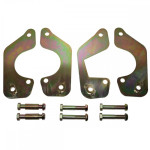
Main image: genuine tyre-repair-kit catalogue photograph. The tools shown do not mean every puncture or tyre is repairable.
Related Products


Leave a comment