


-32x32h.jpg)


-32x32h.jpg)

-32x32h.jpg)


-1000x1000h-32x32.jpg)


-32x32.png)


-32x32w.jpg)





-1000x1000w-150x150.jpg "DT Adventure Portable Camping 55L Compressor Car Fridge Freezer")
-1000x1000w-150x150.jpg "DT Adventure Portable Camping 55L Compressor Car Fridge Freezer")



Published 18 October 2026 · OFM4x4.co.uk
Inspect underbody protection after muddy trips or contact: clear debris, look for deformation and mounting damage, and record changes for a workshop.
The quick answer
A skid plate can hide dirt or damage as well as protect components. Clean and inspect it safely after demanding use, and have significant impacts assessed before the next trip.
Make access safe before cleaning
Park on suitable level ground, allow hot components to cool and follow the vehicle and protection-kit instructions. Never work underneath a vehicle supported only by a jack. If an inspection needs lifting or plate removal, use an appropriately equipped workshop.
Photograph the visible condition before cleaning. A fresh impact mark or displaced mount may be useful evidence. Avoid spraying hot components or forcing water into electrical connectors; use cleaning methods appropriate to the vehicle and fitted accessories.
Clear trapped mud without damaging components
Look for mud and stones around accessible openings and plate edges. Debris can obscure fasteners and make later inspection harder. Clear it carefully rather than using a lever against a sump, line or wiring loom.
Check the manufacturer’s provisions for cleaning and servicing. Drain and access openings differ between kits. A visible hole does not prove that every maintenance operation can be completed without removal, and an opening must not be enlarged casually to make servicing easier.
Inspect the plate and the mounting system
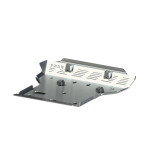
Look for fresh gouges, bent edges, cracked joints, shifted brackets, loose or missing hardware and reduced clearance to protected components. Inspect the surrounding area as well as the most obvious strike point.
A cosmetic scrape and a significant deformation need different responses. If the plate has moved towards a sump, exhaust or driveline part, have it assessed. Do not hammer it straight while fitted or assume that a plate which remains attached has protected everything beneath it.
Combine inspection with normal maintenance
Tell the technician which protection kit is installed before booking a service. Access arrangements vary. Some application-specific plates provide oil-service access, but that cannot be assumed for a different vehicle or kit. Check the exact instructions and allow time for removal and refitting if required.
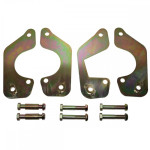
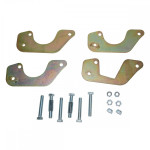
Keep fasteners and brackets identified if components come off. Refitting should follow the kit procedure, including specified hardware and tightening requirements. A missing spacer or substitute bolt can change the clearance that the original installation intended.
Keep an impact and inspection record
Record the trip, location of contact, photographs and the resulting inspection. This helps distinguish an old scrape from a new mounting problem. Investigate fluid leaks, unusual noises or other changed behaviour after a strike instead of attributing everything to the protection plate.
ARB describes vehicle-specific protection for vulnerable underbody components. That purpose does not make a kit indestructible or remove the need for inspection. Contact OFM4x4.co.uk with vehicle details and the kit reference when replacement brackets or protection are needed.
Frequently asked questions
Does a dent always mean replacement?
The decision depends on deformation, mounting integrity and clearance. Have significant damage assessed against the kit requirements.
Can I inspect safely with the vehicle on its supplied jack?
Do not work underneath a vehicle supported only by a jack. Use suitable supported access or a workshop.
Can every skid plate stay fitted during an oil change?
No. Servicing access is application-specific; check the exact kit instructions.
Manufacturer reference: ARB under-vehicle protection overview. Use the current instructions for your exact equipment.
Related Products



Leave a comment