


-32x32h.jpg)


-32x32h.jpg)

-32x32h.jpg)


-1000x1000h-32x32.jpg)


-32x32.png)


-32x32w.jpg)



-1000x1000w-150x150.jpg "DT Adventure Portable Camping 55L Compressor Car Fridge Freezer")
-1000x1000w-150x150.jpg "DT Adventure Portable Camping 55L Compressor Car Fridge Freezer")


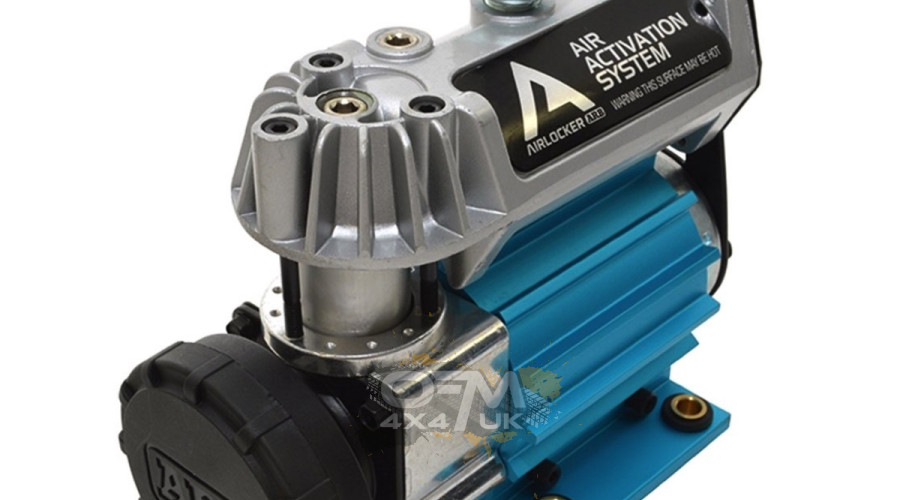
Published 16 October 2026 · OFM4x4.co.uk
Record air locker compressor behaviour, inspect accessible air lines and distinguish owner checks from pressure testing and internal differential work.
The quick answer
Repeated cycling is a symptom to investigate, not a diagnosis of a failed locker. Record the switch state and operating conditions, then use the exact system manual and a competent technician.
Describe the operating pattern
Identify the compressor and locker models. Record whether cycling happens with both lockers off, with one selected or only after driving. Note any other connected equipment and whether the behaviour started after servicing, installation or an impact.
Do not compare an arbitrary number of seconds with a different vehicle and declare a leak. Systems vary. A concise account of when the behaviour changes is more useful than an unsupported pass-or-fail time. Video or an audio recording can help a workshop understand the symptom.
Inspect accessible air lines
With the system switched off and made safe according to its instructions, examine accessible tubing for abrasion, kinks, impact damage and routing near heat or moving parts. Look for fittings that have shifted and lines pulled tight by recent work.
Keep dirt away from opened connections. Do not loosen a pressurised fitting or repeatedly cut a line shorter without checking the required termination procedure. Photograph suspect areas before disturbing them so the technician can see the original routing.
Let pressure testing isolate the fault
A leak could be in external plumbing or elsewhere in the system. The location needs testing. ARB offers an Air Locker test gauge for assessing supply pressure and pressure loss; this is a reason to use an appropriate diagnostic process rather than replacing the compressor on assumption.
Follow the exact product documentation for pressures and test procedure. Do not introduce an unregulated workshop air supply or invent a pressure setting. Internal differential seals and assembly work require the correct workshop procedure and tools.
Avoid running through an unresolved fault
Repeated compressor operation can be a warning that the system needs attention. Follow the operating limits in the compressor manual, and stop testing if it behaves abnormally or becomes excessively hot. A reset or new switch does not establish that the air system is sound.
If engagement is uncertain, avoid making a difficult route depend on the locker working. Plan recovery and route choices around equipment whose operation is confirmed. Do not test engagement by forcing driveline behaviour on a high-grip surface.
Give the workshop a clear starting point
Supply vehicle details, locker and compressor references, installation history and the switch-state observations. Include photographs of the plumbing and any recent repairs. Explain whether other air accessories share the compressor.
OFM4x4.co.uk can help identify the relevant equipment before replacement parts are chosen. Confirm the fault and application first. Changing a compressor, solenoid or locker component without isolating the problem can add cost while leaving the original leak untouched.
Frequently asked questions
Does cycling prove the compressor is worn out?
No. A pressure-loss problem can make a working compressor restart. Diagnosis should isolate the cause.
Can I use any air pressure to test it?
No. Use the exact manufacturer procedure and appropriate regulated test equipment.
Can an external inspection rule out an internal leak?
No. It can identify obvious damage, but pressure testing and workshop diagnosis may still be required.
Manufacturer reference: ARB Air Locker test gauge. Use the current instructions for your exact equipment.
Related Products


Leave a comment