


-32x32h.jpg)


-32x32h.jpg)

-32x32h.jpg)


-1000x1000h-32x32.jpg)


-32x32.png)


-32x32w.jpg)


Series vs. Parallel Batteries: Key Differences
In a world where portable electronic devices and renewable energy systems are prevalent, understanding battery configuration is crucial. Two common arrangements are series and parallel batteries, which share similarities but differ in significant ways. Whether your priority is voltage, capacity, or overall efficiency, selecting the appropriate battery setup can significantly impact performance and lifespan.
Key Takeaways
- Series and parallel batteries are the two common configurations used in battery setup.
- A series battery configuration increases voltage, while a parallel battery configuration increases capacity.
- The pros of a series battery setup are increased voltage, and better suited for higher load applications. Cons include reduced overall capacity and the need for balancing.
- The advantages of a parallel battery configuration are higher capacity and lower risks of power failures. But, it has reduced voltage and the need for battery balancing.
- It's crucial to understand the key differences between series and parallel battery configurations to maximize performance and extend the lifespan of your battery system.
What is a Series Battery Configuration?
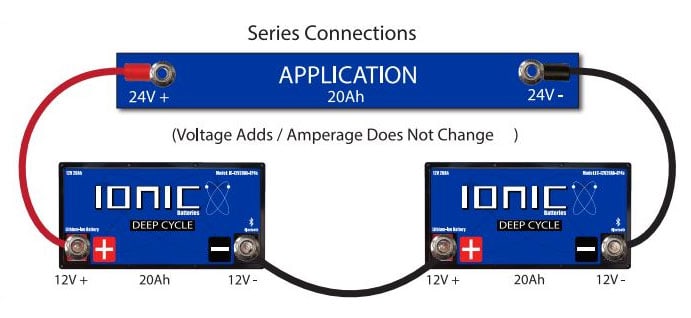
A series battery configuration refers to connecting two or more batteries by linking their terminals in a sequence. This technique is used to increase the total voltage of the battery setup. When batteries are connected in series, the positive terminal of one battery is wired to the negative terminal of another battery, resulting in a single circuit with high voltage output.
The total voltage of the battery setup increases at a rate proportional to the number of batteries connected in series. For instance, if two 12-volt batteries with identical ratings are connected in series, the total voltage of the setup would be 24 volts. However, the capacity of the battery setup would remain unchanged. In summary, connecting batteries in series boosts the voltage output, though it does not improve the capacity of the battery system.
A series battery configuration is commonly used in a broad range of applications, such as powering electric vehicles, solar installations, and off-grid applications.
Pros and Cons of Series Batteries
A series battery arrangement offers several advantages, including an increase in voltage, which is necessary for some applications. By connecting batteries in series, the voltage is multiplied, providing a more efficient power supply. Additionally, series batteries help to reduce installation costs and are ideal for equipment that requires a higher voltage.
However, there are potential drawbacks to using a series battery configuration that must be carefully considered. For instance, because the batteries are wired in series, their overall capacity is reduced, as the amperage remains the same. Additionally, it can be challenging to manage series batteries as they require balanced charging to prevent damage and ensure that they function effectively.
Note: It's essential to ensure that the wiring between each series battery is consistently balanced to avoid the undetected failure of any battery in the battery bank. This ensures that all batteries continue to function at optimal performance.
Ultimately, the suitability of a series battery configuration will depend on the specific application. It's important to carefully weigh the benefits against the potential drawbacks to determine whether it's the best option for your needs.
What is a Parallel Battery Configuration?
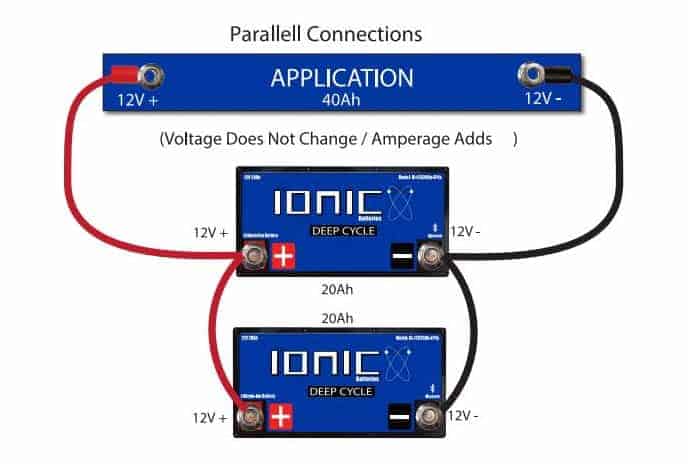
A parallel battery configuration involves connecting multiple batteries together in parallel to increase capacity. This is achieved by wiring the positive terminals of all batteries together, and the negative terminals together, resulting in a single battery bank with increased capacity but the same voltage as each individual battery.
The advantages of a parallel battery setup include increased capacity, as the total capacity of the battery bank is the sum of all individual batteries' capacities. This configuration also provides redundancy, as a failed battery can be easily replaced without affecting the entire system's performance.
However, connecting batteries in parallel can also have implications for voltage and overall performance. If batteries of different capacities or ages are connected in parallel, the weaker battery will pull down the stronger battery, reducing the efficiency of the overall system. Additionally, balancing the charge across all batteries is critical to ensure long-term performance, particularly when using multiple batteries in parallel.
Overall, a parallel battery configuration can be an effective solution for applications requiring increased capacity. However, careful consideration should be given to balancing, monitoring, and maintaining the battery bank to ensure optimal performance and longevity.
Pros and Cons of Parallel Batteries
Parallel batteries are a popular choice for battery banks due to their increased capacity. The ability to connect multiple batteries in parallel increases the overall storage capacity of the battery bank, providing extended runtime. This makes them an ideal choice for off-grid or backup power systems.
However, parallel batteries have their drawbacks. One of the main concerns is the limited voltage output that can be achieved with this configuration. This can be problematic for applications that require higher voltages, such as electric vehicles or solar power systems.
Another issue with parallel batteries is the need for battery balancing. In a parallel configuration, each battery should have the same charge before they are connected to avoid any overcharging or undercharging issues that can impact battery health and longevity.
Despite these potential drawbacks, parallel battery configurations remain a popular choice for their increased capacity and ability to provide extended runtime, making them a reliable solution for a range of applications.
Series vs Parallel Batteries: Performance Comparison
When choosing a battery configuration, it is important to consider the performance of series and parallel batteries. One of the main differences between the two is voltage. Series batteries increase the voltage while parallel batteries increase the capacity.
In terms of voltage, series batteries are the better option as they have a higher voltage than parallel batteries. This means they can power higher voltage devices and are better suited for applications that require high power output, such as electric vehicles and solar systems. However, series batteries have reduced capacity and may experience unbalanced charging, which can lead to a shorter battery life.
On the other hand, parallel batteries have a higher capacity but a lower voltage. They are ideal for applications where long-duration power is needed, such as lighting and radio equipment. However, parallel batteries have a shorter overall life expectancy than series batteries and may require more frequent maintenance to ensure all batteries are charged equally.
When it comes to efficiency, the choice depends on the application. Series batteries tend to be more efficient when the load is high and the discharge is low. Parallel batteries are more efficient when the load is low and the discharge is high.
In summary, the best battery configuration depends on the specific application. For high power output and voltage, series batteries are the better option but may require more maintenance. For long-duration power, parallel batteries offer higher capacity but a lower voltage.
Optimizing Your Battery Configuration for Peak Performance
If you want your battery system to perform optimally, make sure you understand how your battery configuration can affect its overall performance and longevity. Here are some tips for optimizing your battery setup:
Consider Balanced Loads
When connecting batteries in series or parallel, it's important to ensure that the load is balanced between each battery. This will help prevent overloading of individual batteries and prolong the overall lifespan of your battery bank.
Use a Battery Management System
A battery management system can help you monitor individual batteries' health, maintain balance during charging, and prevent overcharging or over-discharging of your battery bank.
Measure Battery Voltage Regularly
Regular voltage measurement can help you track battery performance. If you notice a drop in voltage, it may indicate that one or more batteries are malfunctioning and require maintenance or replacement.
Keep Your Battery Setup Clean and Well-Maintained
Regular cleaning of battery terminals and wiring connections can ensure proper conductivity and minimize the risk of corrosion. It's also important to schedule routine maintenance, such as replacing worn-out batteries or conducting load tests, to ensure your system is performing at maximum efficiency.
By considering load balancing, using a battery management system, regular voltage measurement, and proper maintenance, you can optimize your battery configuration for peak performance and longevity.
Conclusion
Choosing the right battery configuration is essential for optimizing performance, efficiency, and longevity. Understanding the key differences between series and parallel batteries is crucial to ensure that the battery setup aligns with specific needs and applications.
While series batteries offer increased voltage, they come with trade-offs such as reduced capacity and the need for balanced charging. On the other hand, parallel batteries offer increased capacity, but at the cost of limited voltage and the need for battery balancing.
It is essential to consider factors such as load balancing, battery management systems, and other requirements when connecting batteries to enhance performance and longevity. By selecting the appropriate battery configuration and optimizing its setup, it is possible to create robust and reliable battery systems that provide optimal power output.
Whether using series or parallel batteries, ensuring that they are correctly connected and managed is crucial to prevent damage and ensure optimal performance. By following the tips and insights discussed in this article, it is possible to optimize battery configuration, connect batteries correctly and achieve superior battery performance.
FAQ
What is the difference between series and parallel batteries?
In a series battery configuration, batteries are connected in a series circuit, which increases the total voltage while keeping the capacity the same. In a parallel battery configuration, batteries are connected in a parallel circuit, which increases the total capacity while keeping the voltage the same.
How are batteries connected in a series configuration?
Batteries in a series configuration are connected by connecting the positive terminal of one battery to the negative terminal of the next battery, and so on. This increases the total voltage of the battery bank.
What are the pros and cons of using a series battery configuration?
The advantages of using a series battery configuration include increased voltage and the ability to power high-voltage devices. However, there are some potential drawbacks such as reduced overall capacity and the need for balanced charging to prevent individual batteries from being overcharged or discharged.
What is a parallel battery configuration?
In a parallel battery configuration, batteries are connected by connecting the positive terminals together and the negative terminals together. This increases the total capacity of the battery bank.
What are the advantages and disadvantages of a parallel battery setup?
Using a parallel battery setup increases the total capacity of the system, allowing for longer run times. However, it typically results in a lower overall voltage, limiting the ability to power high-voltage devices. Additionally, a parallel battery setup may require battery balancing to ensure equal distribution of the load among the batteries.
How do series and parallel batteries compare in terms of performance?
In a series battery configuration, the total voltage increases, but the capacity remains the same. In a parallel battery configuration, the total capacity increases while the voltage stays the same. The choice between series and parallel batteries depends on the specific requirements of the application.
How can I optimize battery configurations for better performance?
To optimize battery configurations, consider load balancing to distribute the load evenly across batteries, especially in parallel setups. Additionally, utilizing battery management systems can help monitor and control the charging and discharging of batteries to maximize their overall performance and longevity.
What factors should I consider when connecting batteries?
When connecting batteries, consider the voltage and capacity requirements of your application, as well as the limitations and trade-offs of series and parallel configurations. It's important to ensure the batteries used in the setup are compatible and properly wired to prevent any safety hazards.
* the drawings of the Series and Parallel configuration are from the Ionic Lithium Batteries website.
Related Products


Leave a comment