


-32x32h.jpg)


-32x32h.jpg)

-32x32h.jpg)


-1000x1000h-32x32.jpg)


-32x32.png)


-32x32w.jpg)


-1000x1000w-150x150.jpg "DT Adventure Portable Camping 55L Compressor Car Fridge Freezer")
-1000x1000w-150x150.jpg "DT Adventure Portable Camping 55L Compressor Car Fridge Freezer")
-150x150h.jpg "Fabryka 4x4 Engine Cover Toyota Land Cruiser Prado 150 2017-on")
-150x150h.jpeg "Fabryka 4x4 Front Steel Winch Bumper for Version With Plastic Wheel Arch Extensions Toyota Land Cruiser J90 99-02")
-150x150h.jpeg "Fabryka 4x4 Front Steel Winch Bumper for Version With Plastic Wheel Arch Extensions Toyota Land Cruiser J90 99-02")
-150x150h.jpeg "Fabryka 4x4 Front Steel Winch Bumper with Bullbar for Toyota Land Cruiser J90 96-99")
-150x150h.jpg "Fabryka 4x4 Front Steel Winch Bumper with Bullbar for Toyota Land Cruiser J90 96-99")
In the world of off-roading and 4x4 vehicles, lifting your ride is a rite of passage. It's a modification that not only gives your vehicle a more aggressive stance but also improves ground clearance, making it easier to tackle challenging terrains. However, as with any modification, there are side effects. One of the most overlooked consequences of lifting a 4x4 is the alteration of the vehicle's caster angle. This is where castor correction bushes and plates come into play. In this article, we'll delve deep into the importance of these components and answer some of the most frequently asked questions about them.
Understanding Castor Angle
Before we dive into the specifics of caster correction, it's essential to understand what caster angle is. Caster angle, often just referred to as "caster," is the angle between the vehicle's steering axis (the axis around which the front wheels turn) and a vertical line through the wheel's centre when viewed from the side. This angle plays a crucial role in the vehicle's stability, steering feel, and cornering.
The Consequences of Lifting Your 4x4
When you lift a 4x4 vehicle, the geometry of the suspension changes. One of the most significant changes is the alteration of the caster angle. An incorrect caster angle can lead to a range of issues, including:
- Poor Steering Return: After making a turn, the steering wheel might not return to the centre as it should.
- Wandering: The vehicle may wander or drift, especially at higher speeds, making it challenging to maintain a straight line.
- Vibration: There might be noticeable vibrations in the steering wheel.
- Uneven Tire Wear: Incorrect caster can lead to premature and uneven tire wear.
Castor Correction Bushes and Plates
To counteract the adverse effects of lifting a 4x4, it's essential to correct the caster angle. This is where castor correction bushes and plates come into the picture.
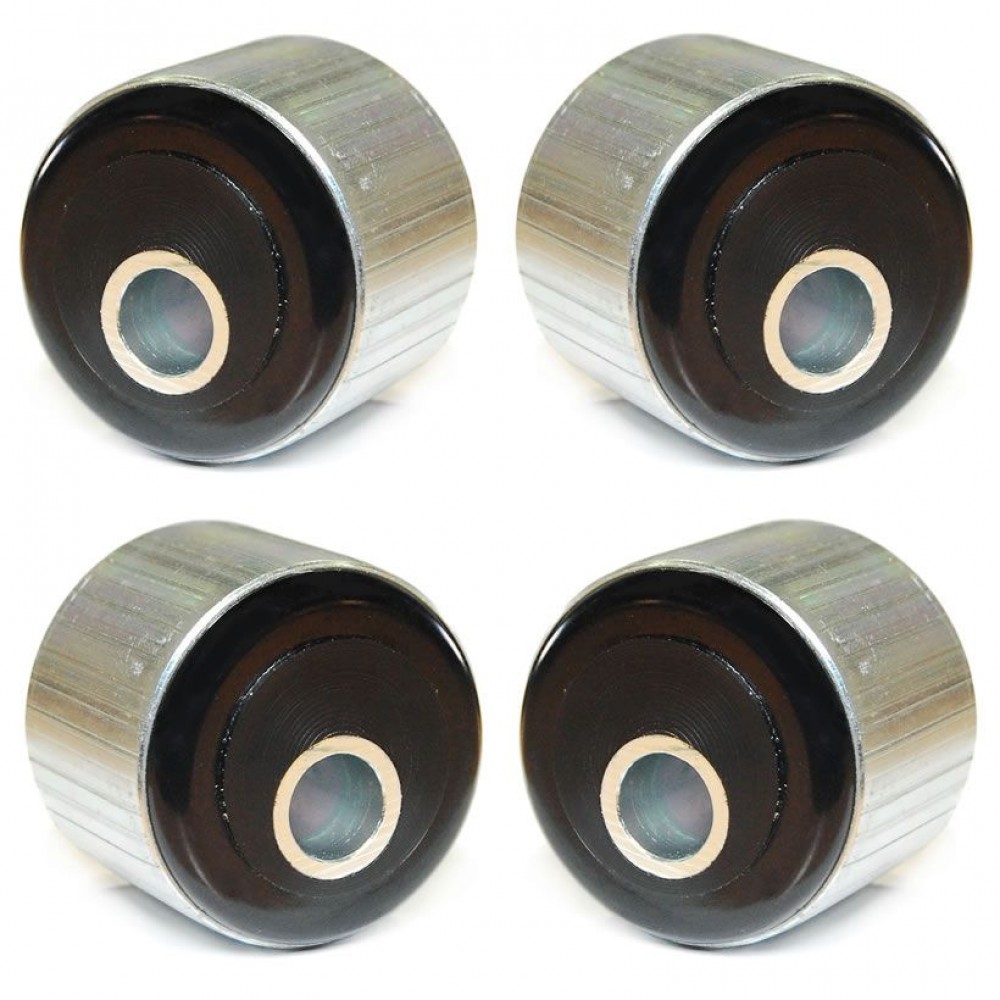
- Castor Correction Bushes: These are specially designed rubber or polyurethane components that replace the standard suspension bushes. They are offset, meaning they adjust the angle of the suspension components, effectively correcting the caster angle. They are relatively easy to install and are a cost-effective solution for mild lifts.
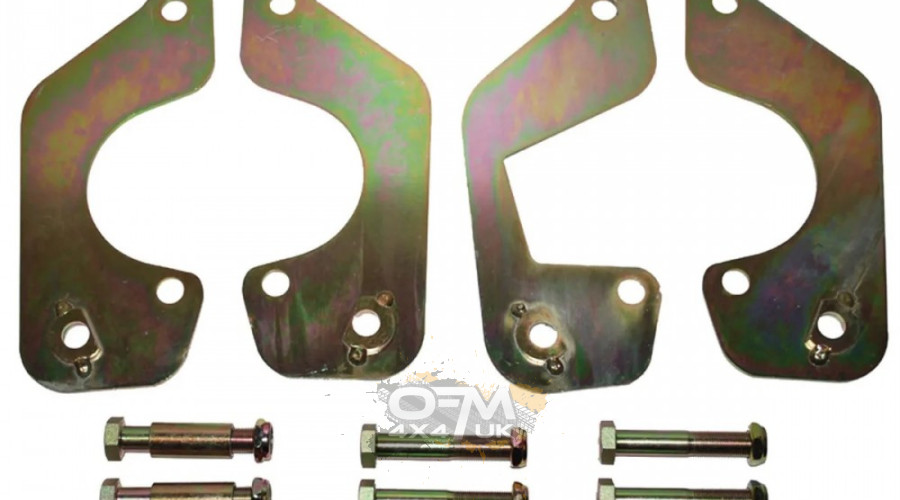
- Castor Correction Plates: For vehicles with more significant lifts, correction plates might be a better solution. These plates are bolted between the axle and the radius arm, adjusting the caster angle. They are more robust and durable, making them ideal for vehicles that see a lot of off-road action.
Caster Correction Arms
Apart from bushes and plates, another solution to caster angle issues is caster correction arms. These are complete replacement arms for the vehicle's suspension, designed with the correct geometry to ensure the right caster angle for lifted vehicles. They are typically more expensive than bushes or plates but offer a comprehensive solution, especially for heavily modified 4x4s.
FAQs on Castor Correction
1. Do I need castor correction bushes?
If you've lifted your 4x4 and are experiencing any of the issues mentioned above, such as wandering or poor steering return, then yes, you might benefit from castor correction bushes, especially if the lift is mild.
2. What do caster correction bushes do?
Caster correction bushes adjust the angle of the suspension components to correct the caster angle, ensuring better steering response and stability.
3. What do caster correction arms do?
Caster correction arms are complete replacement arms for the vehicle's suspension. They are designed to ensure the correct caster angle for lifted vehicles, providing a comprehensive solution to caster-related issues.
4. What is a bushing caster?
A bushing caster refers to the caster correction bush itself. It's a component designed to adjust the caster angle by being offset, effectively changing the geometry of the suspension.
5. What does an incorrect caster cause?
An incorrect caster can lead to poor steering return, wandering, vibrations in the steering wheel, and uneven tire wear.
6. What are the three types of caster?
The three types of caster are:
- Positive Caster: This is when the steering axis tilts toward the driver. It provides stability at high speeds but requires more effort when steering at low speeds.
- Negative Caster: This is when the steering axis tilts away from the driver. It makes steering easier at low speeds but can be unstable at high speeds.
- Zero Caster: This is when the steering axis is perfectly vertical. It's a balance between positive and negative caster but is rarely used in modern vehicles.
Conclusion
Lifting a 4x4 vehicle can transform its capabilities and appearance, but it's essential to address the side effects, especially concerning the caster angle. By understanding the importance of castor correction bushes, plates, and arms, you can ensure that your lifted 4x4 remains stable, safe, and enjoyable to drive. Always consult with a suspension specialist when considering modifications to ensure the best results for your specific vehicle.
Related Products


Leave a comment