


-32x32h.jpg)


-32x32h.jpg)

-32x32h.jpg)


-1000x1000h-32x32.jpg)


-32x32.png)


-32x32w.jpg)



-150x150h.jpeg "Fabryka 4x4 Front Steel Winch Bumper for Version With Plastic Wheel Arch Extensions Toyota Land Cruiser J90 99-02")
-150x150h.jpeg "Fabryka 4x4 Front Steel Winch Bumper for Version With Plastic Wheel Arch Extensions Toyota Land Cruiser J90 99-02")


Complete Guide to 4x4 Camping Gear – Rooftop Tents, Awnings & Overlanding Essentials in the UK
Table of Contents
- Why build a 4x4 camping setup?
- Rooftop tents: soft vs hard shell
- Awnings & rooms: 180/270/450 choices
- 12V power: fridges, solar & dual battery
- Camp comfort: furniture & storage tips
- FAQs
Whether you’re weekending in Snowdonia or tackling Scotland’s wild coasts, the right 4x4 camping gear turns your vehicle into a comfortable micro-camper. This UK-focused guide walks through rooftop tents, awnings, fridge freezers, solar/dual-battery setups and the small upgrades that make big differences on trips. We’ve included live links to categories and products on ofm4x4.co.uk so you can research or buy without hunting around.
Why build a 4x4 camping setup?
Compared with ground tents, a 4x4 rig is faster to deploy, keeps you drier above wet ground, and consolidates sleeping, shade and cooking into a compact footprint. Start with the “big three”: sleeping (rooftop tent), shade (awning) and power/cold storage (12V + fridge). Add protection, recovery and organisation as you go. If you’re new to roof-sleeping, skim our primer: What to bring when camping with a rooftop tent.
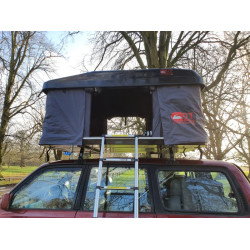
Rooftop tents: soft vs hard shell (how to choose)
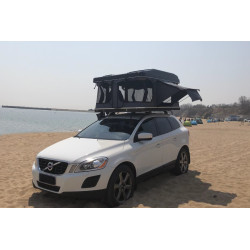
Soft-shell RTTs (fold-out) offer roomy annex options and excellent value. Hard-shell RTTs (clam/box) excel at quick setup, low wind noise and better aerodynamics. Consider: sleep size (140/160/180/210), ladder angle on lifted rigs, shell material, mattress thickness and condensation management.
- Browse all Rooftop Tents
- Popular hard-shell picks: DT Adventure Extreme Hard Shell • Escape Vario 210 Hard Shell
- Proven soft-shells: Escape Alaska 140 • Escape Alaska 160 • Darche Hi-View 1400
Fitment tips: Check dynamic/static roof load, rack bar spacing, and ladder reach on lifted vehicles. Keep bedding inside hard-shells to speed setup. For UK weather, annex walls with doors/windows are invaluable.
Awnings & rooms: 180/270/450 coverage
Awnings create a dry workspace for cooking and gear. The number (180/270/450) describes wraparound coverage. 270°/450° designs offer massive shade and quick deployment; add walls for a wind-proof room. Consider mounting height, door opening clearance and self-supporting vs legged designs.
- Browse Camping Awnings & Rooms
- Customer favourites: Darche Eclipse 270 • Darche Eclipse 180 • Rockalu 450
- Brand spotlight: Darche • Rockalu • DT Adventure
Setup tip: On solo trips, a self-supporting design (e.g., Rockalu) is fast to deploy. Add walls only when wind picks up or temps drop.
12V power: fridges, solar & dual battery
Cold food and device charging elevate comfort. A quality compressor fridge freezer paired with a dual battery/DCDC charger avoids draining the starter battery. Use solar to top up on static camps.
- Shop Fridge Freezers (portable compressor types)
- Smart chargers: 30A MPPT DC-DC • 50A MPPT DC-DC
- Solar panels & accessories: Lensun Solar & MPPT
- Tech explainers: Dual split-charge systems • Fridge freezer setup guide • Lithium vs AGM batteries
Wiring tip: Use appropriately fused cable runs, protect feed lines with split conduit, and isolate the system during maintenance.
Camp comfort: furniture & storage tips
A small table, two compact chairs and a roll-up kitchen keep cooking quick. Store frequently used items (stove, kettle, mugs) at door height; stash bedding in the RTT to save time. Start with our Outdoor & Camping Equipment hub and add as needed.
FAQs – 4x4 camping gear (UK)
1. Soft-shell or hard-shell rooftop tent?
Soft-shells maximise space and value; hard-shells are faster and quieter on the road. If you tour often, hard-shell convenience is hard to beat.
2. What size awning should I choose?
180° for quick shade; 270°/450° for wraparound coverage and cooking/gear areas. Add walls in wind or cold.
3. How big should my fridge freezer be?
40–55 L suits weekends/two people; 60–75 L for longer family trips. Use a dual battery + DC-DC charger to avoid flattening the starter battery.
4. Do I need solar if I drive daily?
Not strictly, but a 100–200 W panel maintains battery health on static camps and in summer queues.
5. Can I wire this myself?
Many do. Use proper fusing, cable sizing and isolators. If unsure, have a 12V specialist check the install.
6. What’s the first upgrade to buy?
If you sleep in the vehicle: a quality RTT. If you cook/tinker more: a fast-deploying awning. Power comes next.
Related Products


Leave a comment